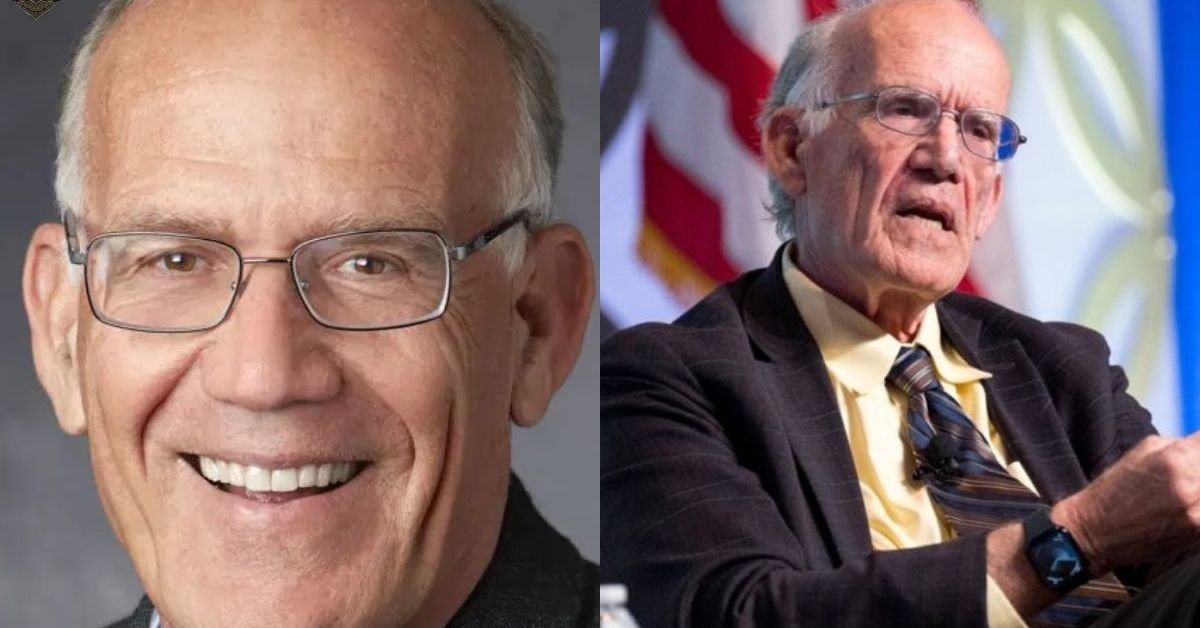
Victor Davis Hanson net worth sits at roughly $5 million in 2026, built through a career that most people wouldn’t think to combine: farming and classical scholarship. He’s a military historian, a Hoover Institution senior fellow, and a lifelong Central Valley farmer, and that mix shaped both his ideas and his income.
You’ll find his fortune scattered across book royalties, decades of teaching, speaking fees, and a working farm in Selma, California. This piece walks through exactly where that money comes from, who’s in his family, what he studied, and how a farm kid from California ended up shaping national conversations about war, culture, and politics.
Victor Davis Hanson Profile Summary
| Category | Detail |
| Full Name | Victor Davis Hanson |
| Date of Birth | September 5, 1953 |
| Age (2026) | 71 years old |
| Birthplace | Selma, California, USA |
| Current Home | Selma, Central Valley, California |
| Nationality | American |
| Occupation | Military historian, classics scholar, political commentator, farmer |
| Net Worth (2026) | Approx. $5 million |
| Primary Employer | Hoover Institution (Senior Fellow) |
| Teaching Career | Professor at California State University, Fresno (1991–present, 30+ years) |
| Undergraduate Degree | BA in Classics, UC Santa Cruz |
| Doctorate | PhD, Stanford University (1984) |
| Field of Study | Ancient Greek warfare and agriculture |
| Spouse | Cara Webb Hanson |
| Children | Three |
| Family Background | Multi-generational Central Valley farming family |
| Signature Book | Carnage and Culture (2001) |
| Best-Known Political Titles | The Case for Trump (2019), The Dying Citizen (2021) |
| Published Works | 20+ books |
| Major Honor | National Humanities Medal (2007) |
| Other Notable Award | Bradley Prize (2008) |
| Media Platform | The Victor Davis Hanson Show podcast |
| Income Sources | Academic salary, book royalties, speaking fees, media work, farm property |
| Farm Holdings | Central Valley agricultural land (est. $1M+ in value) |
Who Is Victor Davis Hanson?
Victor Davis Hanson didn’t start out chasing academic prestige. He grew up on a working farm in Selma, California, and that upbringing left a mark on nearly everything he’s written since. Long before he became a bestselling nonfiction author, he was pulling weeds and fixing irrigation lines alongside relatives who’d worked that same soil for generations. It’s an unusual origin story for someone who’d later earn a PhD from Stanford, and honestly, that’s part of what makes him interesting to readers who otherwise wouldn’t pick up a book on ancient Greek warfare.
His intellectual path took him deep into classical studies, where he developed a fascination with how ordinary farmers and soldiers shaped the ancient world. That interest became the backbone of his scholarship. Rather than staying locked in academic journals, though, Hanson pushed his ideas into public view through newspaper columns, television appearances, and eventually a podcast. He built a reputation as an American classics scholar who could translate 2,500-year-old lessons into commentary on modern American life.
Today, people know him for two very different things at once: rigorous analysis of ancient battles and sharp-elbowed conservative political commentary. Few scholars manage to hold both lanes credibly, but Hanson has done it for over three decades. His farm still operates. His books still sell. And at 71, he shows no real sign of slowing down.
Victor Davis Hanson Net Worth
So, what’s actually behind the number? Victor Davis Hanson’s net worth 2026 estimate of around $5 million didn’t arrive overnight, and it isn’t the product of one lucky break. It’s the result of stacking several income sources on top of each other for over thirty years. That’s a pretty different model from most academics, who lean almost entirely on a university paycheck.
Think of his wealth accumulation as four separate rivers feeding one lake. The first is academic pay from his long professor role. The second is publishing, which includes both new publisher advances and ongoing book royalties from older titles that keep selling. The third is public appearances, meaning speaking fees from universities, conferences, and political events where organizers pay well for a recognizable name.
The fourth, and probably the most overlooked, is the Central Valley farm itself. Farmland in California isn’t cheap, and Hanson’s inherited property value adds real weight to his balance sheet even when it’s not generating direct income.
Compare that to a typical tenured professor, whose financial status might rest almost entirely on salary and a pension. Hanson diversified in a way that protected him from the ups and downs of any single revenue stream. When book sales dip, speaking fees pick up the slack. When speaking engagements slow down, media work and podcast revenue fill the gap. It’s a smart hedge, whether or not he ever thought of it in those exact terms.
Read more.Liz Claman: Career, Salary, Net Worth, Age, Family and Husband Details
Victor Hanson Net Worth Resources
Breaking down exactly where the money comes from tells a clearer story than any single number could. Hanson’s income streams didn’t develop by accident, they built up gradually as his public profile grew.
His academic salary formed the foundation. He joined California State University, Fresno as a professor back in 1991 and stayed for decades, which means steady paychecks plus pension benefits and retirement accounts that compounded over 30-plus years. Senior faculty with his credentials typically earn between $100,000 and $150,000 annually, and that adds up to real money over a long career.
Here’s a rough breakdown of how his income has likely stacked up over time:
| Income Source | Description | Estimated Contribution |
| Academic Salary | Professor at Cal State Fresno since 1991 | $3M+ lifetime earnings |
| Book Sales | 20+ published titles, including bestsellers | $1.5M+ in royalties |
| Speaking Fees | Universities, conferences, political events | $500K+ cumulative |
| Media Appearances | Podcast, newspaper columns, TV commentary | $300K+ ongoing |
| Awards | National Humanities Medal, Bradley Prize | $250K in prize money |
| Central Valley Farm | Agricultural land and operations | $1M+ property value |
His books list does a lot of heavy lifting here too. Carnage and Culture alone sold hundreds of thousands of copies, and it keeps generating royalties years after publication. The Case for Trump became a bestseller during the 2020 election cycle, riding a wave of political interest that translated directly into sales. Add translation rights into other languages, plus digital editions and audiobooks, and you’ve got a book catalog that keeps earning quietly in the background, long after the initial release buzz fades.
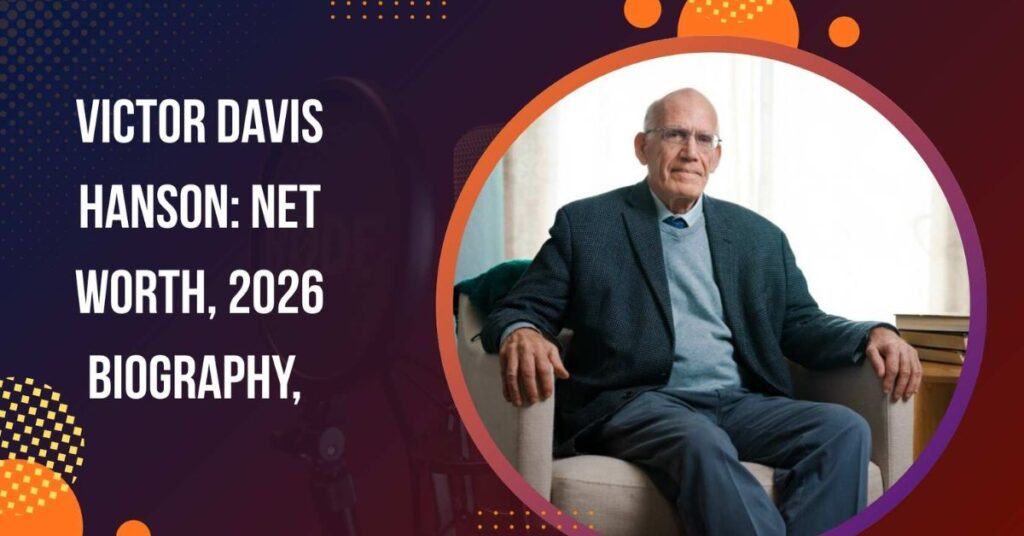
Victor Davis Hanson Family
Family sits at the center of how Hanson understands the world, and it’s not just sentiment, it’s structural. His parents and grandparents worked the same Central Valley land he still farms today, which means the Victor Davis Hanson family history stretches back multiple generations before he was even born. That kind of continuity is rare, and it shows up again and again in his writing about tradition, self-reliance, and American identity.
Growing up surrounded by extended family taught him something that classroom learning alone couldn’t: how responsibility gets passed down, and how land ties people to a place in ways that outlast any single career. His Central Valley farming background isn’t a footnote in his biography, it’s arguably the source code for his entire worldview.
He carried that same balance into his own household. He and his wife raised three children in Selma, splitting their time between rural, hands-on farm life and the demands of a very public academic and media career. That’s no small juggling act. Most people who reach his level of public visibility end up moving to cities or at least stepping away from physically demanding work. Hanson never did. His kids grew up understanding both Homer and harvest schedules, which is an unusual education by any standard.
He’s mentioned in interviews that farm work never conflicted with his intellectual ambitions, instead the two reinforced each other. There’s something almost stubborn about that refusal to choose one identity over the other, and readers seem to respond to it. It’s part of why his commentary lands differently than that of scholars who’ve never done manual labor a day in their lives.
Read more.Adam Edmunds Net Worth 2026: Biography, Career, Wife, and Lifestyle
Victor Davis Hanson Wife
Behind Hanson’s decades of public work stands his wife, Cara Webb Hanson, though she’s kept a notably low profile compared to him. Their marriage has weathered the pressures that come with academic life, public criticism, and constant travel for speaking engagements, and she’s managed to maintain family stability through all of it.
Cara shares his Central Valley roots, which matters more than it might seem. Understanding farm life isn’t something you pick up from the outside, it requires actually living it, and that shared background likely made it easier for the couple to manage both intellectual pursuits and agricultural responsibilities simultaneously. While Hanson traveled for lectures, podcasts, and TV appearances, she held the household together.
It’s worth clearing up some confusion floating around online. Search results occasionally surface a name, Jennifer Hayne, in connection with Hanson’s personal life, but there’s no factual basis for that association. Cara Webb Hanson remains his confirmed spouse, and reports suggesting otherwise, including strange search queries about a “Cara Webb Hanson obituary,” are simply inaccurate. She’s alive, and the couple continues their life together in California.
The Hansons have generally kept their marriage away from the spotlight, even as Victor built a public career centered on controversial political topics. That discretion seems deliberate. Plenty of public figures let their families get pulled into the fray, but the Hansons drew a clear line, and it’s protected their household from a lot of the noise that surrounds Hanson’s professional life.
Victor Davis Hanson Twin Brother
Let’s address this one directly because it comes up often: there’s no evidence anywhere that a Victor Davis Hanson twin brother exists. This is one of those internet myths that took root somewhere and just never got corrected. Public records don’t support it. Family histories don’t mention it. And Hanson’s own extensive writing about his family and upbringing never references a twin sibling.
So where did the rumor come from? Honestly, nobody’s entirely sure. Celebrity and public-figure myths often start from a simple mix-up, maybe a misattributed photo, a similar name, or a confused search result, and then the claim just spreads because people repeat it without checking. Once something like that gets enough traction online, search engines start surfacing it as though it were an established fact, even when reputable biographical sources say nothing of the sort.
Hanson does have siblings, and they share his Central Valley farming background and upbringing. But none of them are twins, and none have achieved anywhere near his level of public recognition. The family included multiple children, which may be part of where the confusion originated, but a larger family isn’t the same thing as an identical twin.
If you’re researching Hanson’s biography, it’s worth sticking to academic profiles, his own published interviews, and established outlets rather than casual social media posts or low-quality content farms. Those sources tend to recycle unverified claims without any fact-checking, which is exactly how myths like this one manage to survive for years.
Read more.Big Boogie Net Worth (Updated 2026) | Rapper’s $1M Journey
Victor Davis Hanson Education
Hanson’s education laid the groundwork for everything that came afterward, starting with his undergraduate years at UC Santa Cruz, where he earned a BA Classics (UC Santa Cruz) degree. That’s where his fascination with ancient Greek and Roman civilization first took shape, and it set him on a very specific intellectual path early on.
From there, he moved to Stanford for doctoral work, completing his PhD Stanford University (1984). His dissertation dug into the connection between ancient Greek warfare and agriculture, a topic that let him combine his farm background with his classical training in a way few other scholars could.
That’s not a coincidence, it’s really the intellectual thread that runs through his entire career. He wasn’t just studying history from a distance, he understood agricultural labor firsthand, and that gave his analysis of ancient farmer-soldiers a texture that purely academic researchers often lack.
Studying under established classicists at Stanford shaped his methodology in lasting ways, teaching him to combine careful textual analysis with broader cultural interpretation rather than staying narrowly focused on translation work alone. That combination became his signature approach.
After finishing his doctorate, he joined the faculty at California State University professor ranks in 1991, teaching classics and military history at Fresno for more than three decades. That academic position gave him something valuable beyond a paycheck: institutional stability and the freedom to write prolifically without financial pressure forcing rushed or shallow work. His education in Western civilization studies wasn’t just a credential, it became the toolkit he’d use for the rest of his career, from ancient battle analysis all the way to modern political commentary.
Victor Davis Hanson Books
Hanson’s bibliography spans more than 20 titles, covering everything from ancient military campaigns to sharp-edged modern political analysis, and that range is a big part of why he’s remained relevant across such different reader audiences. His books list reads almost like two separate careers stitched together.
Carnage and Culture, published in 2001, put him on the map internationally as a military historian worth taking seriously outside academic circles. The book argued that Western military success throughout history stems from specific cultural values, a thesis that sparked plenty of debate and cemented his reputation as a serious voice in strategic and historical analysis.
His later work shifted noticeably toward contemporary politics. The Case for Trump, released in 2019, defended the former president’s political approach and became a bestseller during a genuinely turbulent election cycle. The Dying Citizen, published in 2021, warned about threats to American civic culture, tapping into anxieties that resonated with a large chunk of his readership.
Here’s a quick look at his most notable titles:
| Book Title | Year | Subject | Significance |
| Carnage and Culture | 2001 | Western civilization studies | International bestseller |
| A War Like No Other | 2005 | Peloponnesian War | Major ancient history work |
| The Second World Wars | 2017 | WWII history | Unique analytical approach |
| The Case for Trump | 2019 | Political commentary | Controversial bestseller |
| The Dying Citizen | 2021 | American culture | Warning about civic decline |
Between the ancient history titles and the political ones, Hanson built a body of work that keeps generating royalties year after year, proving that a well-timed book with staying power can outearn almost any single speaking engagement.
Victor Davis Hanson Accident
A few years back, reports surfaced online about a Victor Davis Hanson accident, apparently involving a motorcycle incident. Details never became fully public, and specifics about his injuries and treatment remained private, which is understandable given how personal medical information tends to be.
What stood out to a lot of observers was how quickly he bounced back. Despite the setback, Hanson resumed his writing and commentary schedule remarkably fast. His podcast kept running. His columns kept appearing. There wasn’t any extended public absence that would’ve suggested a serious, lingering impairment.
That resilience fits neatly with the persona he’s built over decades, someone who studies toughness in historical military leaders and, in a smaller way, embodies some of that same grit himself. It’s worth remembering that even prominent public intellectuals face ordinary physical setbacks just like anyone else, and how someone handles that kind of disruption says something about their character.
Hanson’s quick return to full activity, without any visible long-term impairment, reassured readers and colleagues who’d grown used to his steady presence in political and historical commentary. He returned to his usual pace, and beyond the initial reports, the incident hasn’t come up much since.
Social Media Presence
Hanson maintains an active footprint across several platforms, which helps explain how he’s stayed relevant well past the point where many academics fade from public view. His podcast (The Victor Davis Hanson Show) remains the centerpiece of his media presence, offering long-form discussions that let him dig into topics with far more depth than a TV segment ever could.
| Platform | Handle/Page | Content Type |
| @victor.d.hanson | Commentary, Hoover Institution updates | |
| VDH’s Morning Cup | Articles, podcast episodes | |
| Twitter/X | Active account | Political commentary, debates |
| Podcast | The Victor Davis Hanson Show | Long-form discussions |
| Official Site | Hoover Institution profile | Research, biography |
This spread across platforms isn’t just about visibility, it’s also a revenue channel in its own right, feeding into his broader media appearances income and keeping his book sales steady between major releases.
FAQ’s
What is Victor Davis Hanson’s net worth in 2026? His net worth 2026 sits at approximately $5 million, built through academic work, book sales, speaking fees, media appearances, and his Central Valley farm holdings.
How old is Victor Davis Hanson? Victor Davis Hanson age is 71 in 2026. Born September 5, 1953, in Selma, California, he remains professionally active as a historian and commentator.
What are Victor Davis Hanson’s most famous books? His best-known titles include Carnage and Culture, The Case for Trump, The Dying Citizen, A War Like No Other, and The Second World Wars.
Is Victor Davis Hanson married? Yes. He’s married to Cara Webb Hanson, and together they raised three children while maintaining their family farm in California’s Central Valley.
What is Victor Davis Hanson’s educational background? He earned his BA in Classics from UC Santa Cruz and a PhD from Stanford University in 1984, specializing in ancient Greek military history.
Conclusion
Victor Davis Hanson’s net worth 2026 figure, roughly $5 million, tells a story that’s bigger than any single number. It reflects decades of stacking income sources: teaching, writing, speaking, and farming, into something durable rather than relying on one big payday. His lifetime earnings show what happens when classical scholarship meets practical, hands-on work ethic.
What makes his path genuinely unusual is how little he’s had to choose between identities. He’s stayed a farmer even while becoming a nationally recognized commentator. He’s stayed a rigorous historian even while wading into heated political debates. That refusal to pick a single lane is probably his most defining trait, and it’s clearly paid off financially as well as intellectually.
From Selma’s farmland to the halls of Stanford and the Hoover Institution, Hanson built a career that proves intellectual work and practical labor aren’t opposites, they can reinforce each other. Whether readers come to him for ancient history or modern politics, his financial success stands as evidence that diversified, patient effort tends to outlast any single lucky break.