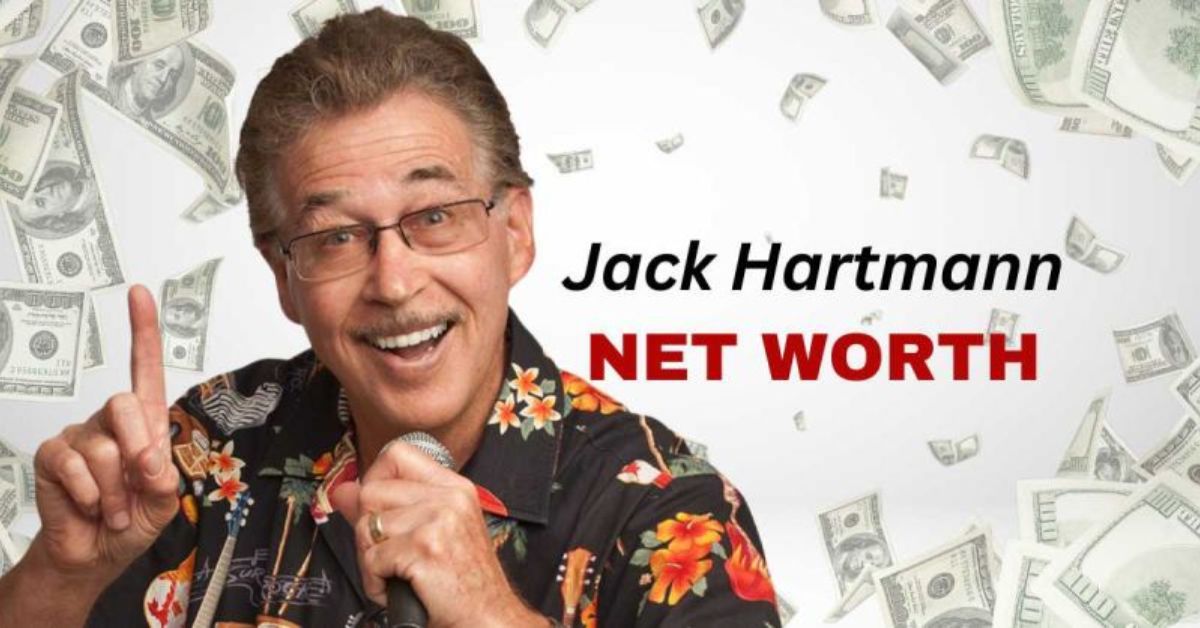
Turning multiplication tables into sing-along hits sounds simple, but almost nobody has pulled it off the way Jack Hartmann has. Over five decades, this children’s musician built an empire out of catchy classroom tunes, and today, Jack Hartmann net worth sits at an estimated $10 million. He didn’t stumble into this success.
He engineered it, blending a background in child psychology with genuine musical talent to create songs that actually stick in a child’s memory. This guide walks through his early life, his education, his career milestones, and exactly how he built his fortune. Whether you’re a teacher, a curious parent, or just someone who wonders how a guy singing about the alphabet ended up a millionaire, you’re about to get the full picture.
Jack Hartmann Profile Summary
| Fact | Detail |
|---|---|
| Full Name | Jack Hartmann |
| Date of Birth | March 2, 1949 |
| Birthplace | Florida, USA |
| Age (2025) | 75 years |
| Profession | Children’s musician, educator, songwriter |
| Education | M.S. in Child Psychology |
| Career Start | 1970 |
| Educational Songwriting Began | 1980 |
| YouTube Channel Launched | 2009 |
| YouTube Subscribers | 4.87+ million |
| Net Worth (2025) | $10 million |
| Primary Income Source | YouTube ad revenue |
| Other Income Streams | Music royalties, album sales, merchandise, school appearances, licensing deals |
| Known For | Educational songs for early childhood learning |
| Years Active | 55+ years |
Who Is Jack Hartmann?
Jack Hartmann isn’t your average kids’ entertainer. He’s a trained children’s musician and American educator musician who treats every song like a lesson plan set to a beat. His catalog spans counting songs, phonics tunes, and tracks about sharing and kindness. Teachers don’t just play his videos for fun; they build entire lesson plans around them because his work genuinely improves how kids retain information.
What sets him apart? He never approached music as pure entertainment. Every melody exists to teach something specific, and that intentionality shows. His grounding in psychology gives him an edge that most performers simply don’t have. He understands rhythm, repetition, and pacing the way a scientist understands data, and he uses that understanding to build songs that stick.
Kids watching his videos rarely realize they’re learning. They’re bouncing around, clapping, singing along, and having a blast, meanwhile their brains are absorbing math facts and vocabulary without any of the usual classroom friction. That’s the trick behind his staying power. As one elementary teacher put it in a widely shared review, “His songs do in three minutes what I couldn’t do in a week of worksheets.”
His approach to classroom learning music reshaped how early educators think about instruction, and honestly, the education world hasn’t looked back since.
Read more.319 Jail Quotes and Encouraging Words for Someone in Prison
Jack Hartmann Early Life
Born on March 2, 1949, in Florida, Jack Hartmann grew up somewhere that practically hums with rhythm. Florida’s mix of cultures, its coastal energy, and its tight-knit communities left a mark on him early. He wasn’t the kid sitting quietly in the corner. He was out there, soaking in stories, music, and traditions from every direction, and that exposure shaped how he later approached teaching.
Palm trees and ocean air don’t automatically produce a musician, but they do build a certain sensitivity to rhythm and mood, and Hartmann seems to have absorbed plenty of both. He wasn’t merely observing his surroundings either; he was participating, engaging, and asking questions. That kind of childhood curiosity often predicts a creative adult, and in his case, it certainly did.
Even before anyone called him a professional, friends and neighbors noticed his musical instincts. He gravitated toward songs and performance the way some kids gravitate toward sports. Community involvement became second nature to him, and it planted the seeds for a career built on connection rather than performance for its own sake.
By the time he reached adulthood, Hartmann had already developed the instincts that would define his career: empathy, curiosity, and a deep appreciation for storytelling through music. Florida gave him the raw material. What he built with it later changed how millions of children learn.
Jack Hartmann Education
Here’s where things get interesting. Hartmann didn’t just pick up a guitar and start writing kids’ songs on a whim. He earned an M.S. in Child Psychology, and that decision turned out to be the smartest move of his career. Instead of guessing what worked for young learners, he actually studied it.
A child psychology degree teaches you how children process information, how their attention spans work, and which teaching methods actually improve retention versus which ones just look good on paper. Hartmann absorbed all of that and then asked a genius question: what if you combined proven psychological principles with music?
That fusion became his signature. His grasp of learning retention techniques meant he wasn’t guessing which songs would help kids remember the alphabet or basic math. He knew, based on research, which rhythmic patterns and repetition structures actually cement information in a developing brain.
This is also where child-centered education enters the picture. Rather than designing songs adults might enjoy, Hartmann designed them around how children actually think and learn at different developmental stages. A toddler needs something different than a second grader, and his music reflects that nuance throughout his catalog.
In short, his education wasn’t a side note to his career, it was the entire foundation. Without that psychology background, his songs might have been catchy, but they likely wouldn’t have been nearly as effective. That’s the difference between an entertainer and an educator who happens to write songs.
Why His Academic Background Matters So Much
Plenty of children’s musicians write fun songs. Very few of them write songs backed by actual developmental science. That distinction explains why schools trust his content enough to build curricula around it, rather than treating it as background noise during free time.
Jack Hartmann Career
Hartmann’s professional journey began in 1970, and remarkably, he’s still active today, more than fifty years later. Back then, traditional teaching methods felt stale to him, so instead of complaining about it, he started experimenting. He wanted to know whether music could do what worksheets couldn’t, and it turns out, it absolutely could.
Over the decades, his catalog grew into something genuinely comprehensive. Math, literacy, social-emotional learning, physical movement, none of these subjects escaped his attention. He didn’t just write songs; he built an entire educational ecosystem, one track at a time. Teachers across the country noticed, and adoption spread quickly, first through cassette tapes and CDs, later through digital platforms.
What makes his Jack Hartmann career so remarkable isn’t just longevity, though fifty-plus years is nothing to scoff at. It’s consistency. He never chased trends. He stuck to his core mission: making learning enjoyable without sacrificing educational value. That kind of discipline is rare, especially in an industry that often rewards flash over substance.
The broader educational entertainment industry eventually caught up to what he’d been doing all along. Schools embraced his methods, parents trusted his content, and children genuinely looked forward to lesson time when his songs were involved. That’s a hard trifecta to pull off, yet Hartmann managed it decade after decade.
His career also demonstrates something valuable for anyone building a business around passion: persistence pays off, but only when it’s paired with genuine expertise. He didn’t get lucky. He built something real, brick by brick, song by song, and the results speak for themselves.
Read more.Old Hollywood Dress to Impress: The Ultimate Style Guide for Men & Women
Creation of Educational Songs
Things shifted in 1980 when Hartmann started writing music specifically designed for teaching, rather than general entertainment. That pivot changed everything. Before this point, kids’ music existed mostly to amuse. After it, Hartmann proved music could be both fun and functional at the same time.
His kids educational songs followed a distinct formula. Repetition reinforced key concepts. Call-and-response sections encouraged participation instead of passive listening. Movement-based lyrics kept young bodies engaged alongside young minds. None of this happened by accident; it reflected careful, deliberate educational songwriting, built on the psychological principles he’d studied years earlier.
Teachers noticed immediate results. Classrooms using his content showed better engagement, and students actually retained lesson material longer than they did with traditional methods. That’s a bold claim, but it’s backed by decades of classroom adoption across the country, not just anecdotal praise from a handful of fans.
His subject range expanded steadily too. Literacy development songs helped kids crack phonics without the usual frustration. Math learning songs turned numbers from something scary into something genuinely fun. Social skills songs tackled empathy and cooperation, subjects that are notoriously hard to teach through worksheets alone. Each category reflected his broader mission: teaching fundamentals through music in a way that actually sticks.
This period cemented his reputation as more than a performer. He became a genuine innovator in music-based learning, someone whose techniques other educators started studying and replicating. That influence continues shaping early childhood classrooms even now, decades after those first songs debuted.
Jack Hartmann Launch YouTube Channel
In 2009, Hartmann made a decision that would reshape his entire career trajectory: he launched a YouTube channel. At the time, digital learning platforms were still in their infancy, and plenty of established performers hesitated to embrace the format. Hartmann didn’t hesitate. He jumped in early, and that timing turned out to be everything.
Today, his channel boasts over 4.87 million YouTube subscribers, with billions of cumulative views across his catalog. That kind of reach puts him among the most-watched figures in children’s education content anywhere online. Numbers that large don’t happen by accident; they reflect consistent uploads, reliable quality, and content that parents trust enough to hand their kids a tablet and walk away without worry.
YouTube didn’t just expand his audience, it transformed him from a regional educator into a global presence. Suddenly, online education channels gave families in different countries access to the same songs American classrooms had used for years. Parents in Australia, teachers in Canada, and homeschoolers everywhere started incorporating his videos into daily routines.
His YouTube kids content also became a staple in remote and hybrid learning environments, especially during periods when classrooms shifted online. Teachers leaned on his videos as reliable school teaching resources, filling gaps that traditional curricula couldn’t always cover on short notice.
This platform shift dramatically boosted his income too. Ad revenue from billions of views became a significant chunk of his earnings, turning what started as a side project into one of the most valuable pieces of his financial portfolio. Simply put, YouTube didn’t just grow his audience, it multiplied his fortune.
Awards and Recognition
Recognition followed Hartmann steadily throughout his career, though he never seemed to chase it. Professional organizations within the children’s education programs space honored his contributions repeatedly, praising both his creativity and his measurable classroom impact. His teacher-approved music earned him credibility that few entertainers in his space ever achieve.
But honestly, the real proof isn’t in trophies sitting on a shelf. It’s in adoption rates. Schools across the United States use his songs daily, and international educators have picked up his methods too, applying them in classrooms far outside his original American audience. That kind of organic, word-of-mouth expansion says more than any award ceremony could.
Teacher testimonials consistently highlight reliability and effectiveness, two qualities that matter far more in education than flashy production value. Parents echo similar sentiments, often noting how quickly their kids pick up new concepts after repeated exposure to his songs. That combination of professional and grassroots validation is rare.
His legacy stretches well beyond formal recognition, too. He fundamentally changed how educators approach subjects like kindergarten music lessons, shifting the standard from passive listening toward active, participatory learning. Future generations of teachers now study his techniques, treating his catalog almost like a textbook on effective early childhood instruction.
In many respects, his greatest award isn’t a plaque or a certificate. It’s the millions of children who learned to count, read, and cooperate because a song made those lessons stick.
How Much Is Jack Hartmann Net Worth?
Let’s get to the number everyone’s curious about. As of 2025, Jack Hartmann net worth is estimated at $10 million. For an educator who built his career around classroom songs rather than mainstream pop hits, that’s an impressive figure, and it didn’t come from a single source. His wealth reflects diversified revenue streams built up steadily over decades.
The table below breaks down where his money actually comes from.
| Revenue Source | Description |
|---|---|
| YouTube Monetization | Ad revenue from billions of cumulative views across his channel |
| Music Streaming Royalties | Passive income from platforms like Spotify and Apple Music |
| Album Sales | Both digital and physical sales of his educational music collections |
| Merchandise Sales | Books, DVDs, and other educational products for kids |
| Live Performances | Concerts and appearances at schools and community events |
| School Appearances | Direct bookings from educational institutions nationwide |
| Licensing Deals | Fees for using his songs in curricula and third-party platforms |
| Speaking Engagements and Workshops | Fees earned from educator training sessions |
YouTube monetization stands out as his single largest income source, largely because his channel generates such consistent, high-volume traffic. That said, music streaming royalties add a steady stream of passive income too, since parents and teachers replay his songs constantly across multiple platforms.
Brands also pay a premium to associate with his content, since family-friendly music commands trust that few other advertising avenues can match. Add in licensing deals for curriculum use, plus ongoing speaking engagements and workshops, and you get a financial portfolio that’s remarkably resistant to industry downturns. Compared to peers in the children’s entertainment space, his combination of longevity and diversification puts him in rare company.
Read more.237+ African American Monday Blessings: Uplifting Your Week with Faith and Culture
Social Media Links
Hartmann maintains a consistent presence across several platforms, and each one serves a distinct purpose within his broader strategy. YouTube remains the anchor, but he doesn’t rely on it exclusively.
| Platform | Purpose | Engagement Level |
|---|---|---|
| YouTube | Primary content hub | 4.87M+ subscribers |
| Parent and teacher community | High interaction | |
| Behind-the-scenes content | Growing audience | |
| Twitter/X | Quick updates and announcements | Active following |
His social media presence extends his reach well beyond video content alone. Facebook, for example, functions almost like a community forum where teachers swap ideas about using his songs in lesson plans. Instagram gives fans a more personal look at his creative process, which helps humanize a brand that could otherwise feel purely commercial.
This cross-platform strategy isn’t just about visibility, either. It reinforces trust. Parents who see consistent, high-quality content across multiple channels are far more likely to recommend his work to other families, which in turn fuels organic growth without heavy advertising spend.
FAQs About Jack Hartmann Net Worth
What is Jack Hartmann’s net worth in 2025? Jack Hartmann’s net worth is approximately $10 million, built through YouTube revenue, music streaming royalties, merchandise sales, and live performances.
How did Jack Hartmann become famous? He built his reputation by creating educational songs for children, then accelerated his fame significantly after launching his YouTube channel in 2009, which now has 4.87 million subscribers.
What is Jack Hartmann’s educational background? He holds a Master of Science degree in Child Psychology, which directly shaped how he writes age-appropriate, developmentally sound songs for young learners.
When did Jack Hartmann start his music career? He began his education career in 1970 and started writing music specifically for teaching purposes in 1980.
Why are Jack Hartmann’s songs so popular? His songs combine catchy melodies with genuine educational content, helping kids learn math, literacy, and social skills while they’re busy having fun.
Conclusion
Jack Hartmann net worth tells a story that goes well beyond dollar signs. His $10 million fortune reflects genuine passion, backed by real expertise, sustained over more than five decades. He didn’t stumble into success by luck. He built it deliberately, using his child psychology degree as the foundation for songs that actually work, not just songs that sound nice.
His legacy reaches far beyond financial achievement, too. Millions of children learned to count, read, and treat each other kindly because a simple song made those lessons memorable. Teachers still lean on his interactive learning tools every single day, and his influence on early childhood education shows no signs of fading anytime soon.
If there’s one lesson to take from his career, it’s this: genuine expertise, paired with consistent effort, tends to outlast trends. Hartmann proved that helping kids learn doesn’t have to feel like work, for the child or the teacher, and that idea alone has been worth every bit of the fortune he’s built.